What You Get With This Free Conversation Circle Packet:
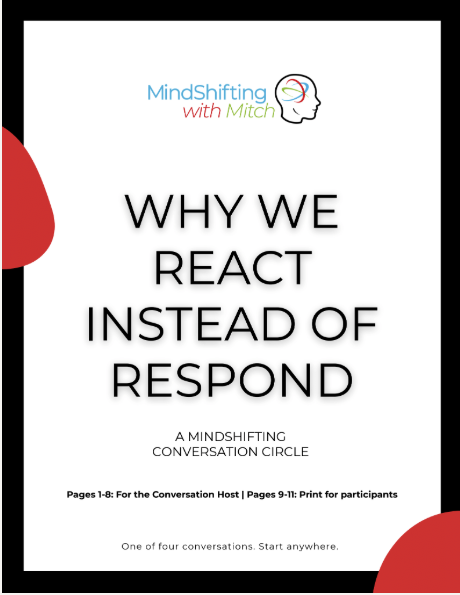
Why We React Instead of Respond: A MindShifting Conversation Circle for Your Educator Team
Give your educators a structured, 60‑minute space to talk honestly about tough conversations—and leave with a shared language they can use tomorrow.
When conversations get tense, even the best educators can default to habits that shut down learning: getting louder, going quiet, or changing the subject just to keep the peace.
This Conversation Circle helps your team notice those automatic reactions and practice small, realistic shifts that allow them to respond appropriately, instead.
You don’t need a conflict‑resolution expert, a training budget, or hours of prep. Everything is built for a non‑expert host: a playbook, icebreakers, a guided conversation arc, troubleshooting tips, and a closing script.
Your job is not to teach—it’s to host
A complete host playbook: timing, questions, and prompts for a 45–60 minute session you can run in a staff meeting, PLC or PD session.
Ready‑to‑print participant handouts that explain “reactive brain” and “thinking brain” in plain language.
Three flexible icebreakers to get educators talking without putting anyone on the spot.
A closing script and takeaway sheet to help staff carry the conversation back into classrooms, teams and your school culture.
Why This Conversation Matters To Your School/District
Most educators don’t have a safe, structured space to talk about the conversations that keep them up at night—with students, families, colleagues, or leaders. This Circle normalizes those experiences and lets people see they’re not the only ones replaying hard conversations—and that you’re creating a place to handle them together.
By naming the shift from ‘reactive brain’ to ‘thinking brain,’ you give staff a shared mental model they can use with students, families, and colleagues—in hallways, classrooms, and family meetings. It’s a simple way to reduce reactivity, increase curiosity, and keep more conversations in the learning zone.
As a leader, you’re not adding one more initiative—you’re creating a container where people feel heard, respected, and better equipped for the daily conflicts that come with the work.
Get the Conversation Circle Packet for Your School or District
(Fill this out to access the full session guide and participant materials instantly.)
By submitting this form, you agree to receive occasional emails from MindShifting with Mitch related to education, mindset, and professional development.
You can unsubscribe at any time by clicking the link in our emails and your information will never be shared or sold.
This packet is designed for leaders who want to:
Give staff a safe space to name what’s hard about conflict.
Build a shared language for reacting vs. responding.
Run a meaningful session without designing PD from scratch
You can host this Conversation Circle in a staff meeting, PD day, department meeting, or with a leadership team. No lectures, no slides required—just people talking about how they show up in tough conversations and what they want to do differently.